
Legal Planning for Alzheimer’s, Dementia & Parkinson’s: A Guide for Central Illinois Families

A diagnosis of Alzheimer’s, Parkinson’s, or another form of dementia changes everything — often all at once.
Learning that you or a loved one has been diagnosed with Alzheimer’s disease or another long-term illness can feel overwhelming, often bringing uncertainty about what comes next. In the midst of that uncertainty, having a clear plan can provide stability and peace of mind. The months ahead will involve important legal, financial, and care related decisions from establishing decision-makers and organizing assets to understanding care options and preparing for future needs. By taking thoughtful, proactive steps now, you can remain in control, protect what matters most, and ensure that both you and your family are supported every step of the way.
This page is here to help you slow down and take it one step at a time.
We’ve pulled together our most practical resources for families navigating this journey in Central Illinois: guides, checklists, and information on the legal and financial decisions that matter most. You don’t have to figure this out alone — and you don’t have to do it all today.
Who this page is for: Whether you’ve recently been diagnosed, you’re helping a parent who has, or you’re getting ahead of what may be coming — these resources are for you.
▶ Not sure yet? Start with the warning signs of dementia.
▶ Not sure where to start? Begin with the checklist below.
A diagnosis of Alzheimer’s, Parkinson’s, or another form of dementia changes everything — often all at once.
Learning that you or a loved one has been diagnosed with Alzheimer’s disease or another long-term illness can feel overwhelming, often bringing uncertainty about what comes next. In the midst of that uncertainty, having a clear plan can provide stability and peace of mind. The months ahead will involve important legal, financial, and care related decisions from establishing decision-makers and organizing assets to understanding care options and preparing for future needs. By taking thoughtful, proactive steps now, you can remain in control, protect what matters most, and ensure that both you and your family are supported every step of the way.
This page is here to help you slow down and take it one step at a time.
We’ve pulled together our most practical resources for families navigating this journey in Central Illinois: guides, checklists, and information on the legal and financial decisions that matter most. You don’t have to figure this out alone — and you don’t have to do it all today.
Who this page is for: Whether you’ve recently been diagnosed, you’re helping a parent who has, or you’re getting ahead of what may be coming — these resources are for you.
▶ Not sure where to start? Begin with the warning signs of dementia or the checklist below.

Not every family is in the same place. Browse the resources below and start with what’s most pressing for you right now.
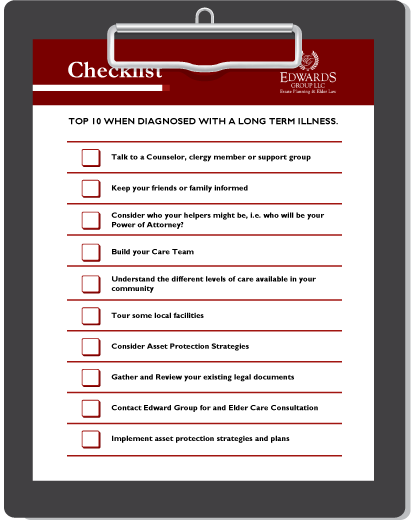
Top 10 Things To Do When Diagnosed With a Long-Term Illness
If you’ve just received a diagnosis — or you’re helping someone who has — it’s hard to know what to do first. This checklist cuts through the noise. It covers the 10 most important steps to take now, from organizing legal documents to protecting your savings, so you can focus your energy where it matters most.

Protect Your Resources from Nursing Home Expenses
Nursing home care in Illinois can cost $80,000–$100,000 per year or more. Most families don’t realize there are legal strategies — like Irrevocable Trusts and Medicaid planning — that can protect your home and savings before a crisis hits. This guide explains your options in plain language, including what Medicaid will and won’t cover, and what steps to take now to preserve what you’ve worked hard to build.
Protect Your Resources from Nursing Home Expenses
Nursing home care in Illinois can cost $80,000–$100,000 per year or more. Most families don’t realize there are legal strategies — like Irrevocable Trusts and Medicaid planning — that can protect your home and savings before a crisis hits. This guide explains your options in plain language, including what Medicaid will and won’t cover, and what steps to take now to preserve what you’ve worked hard to build.
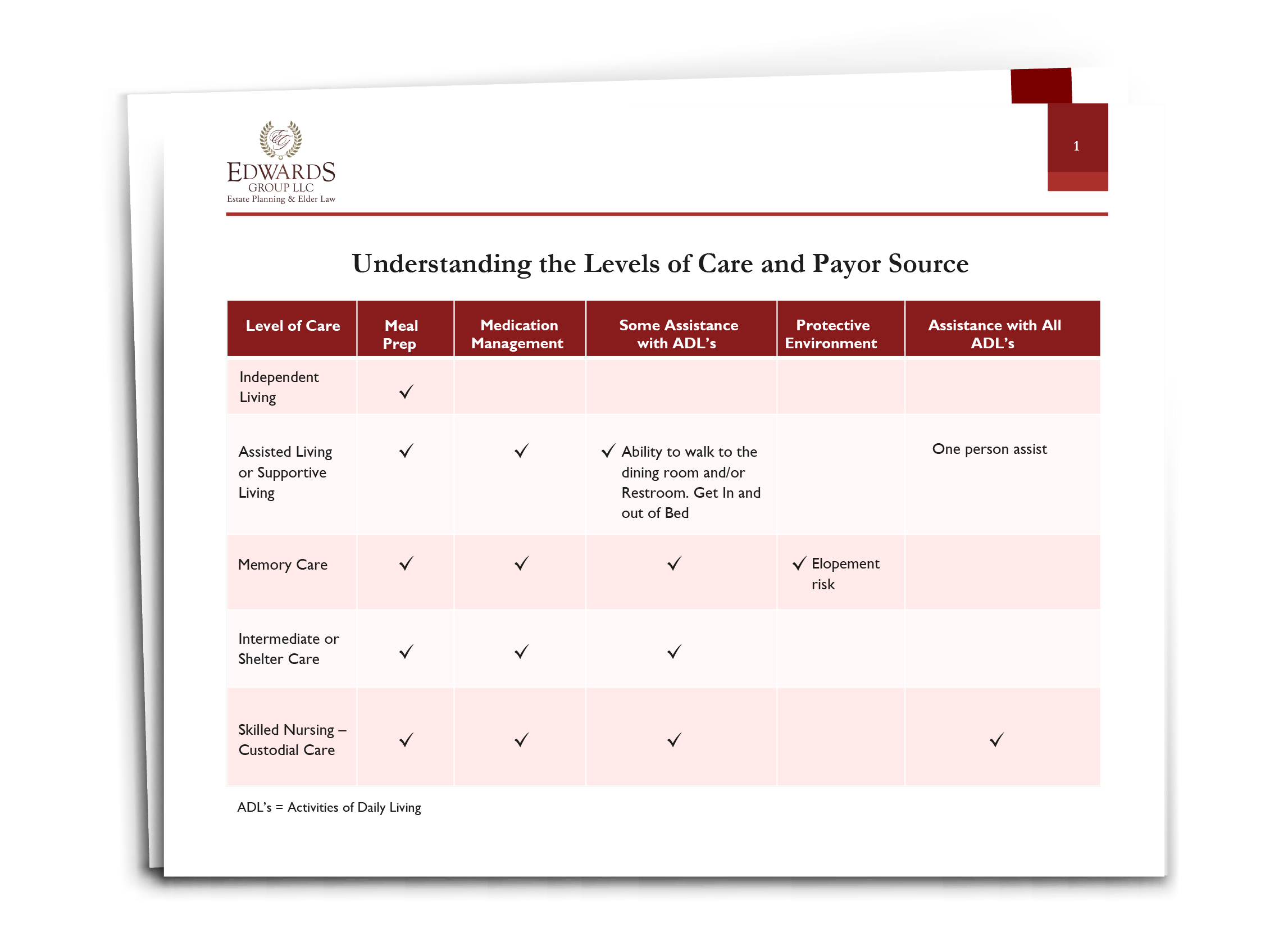
Understanding the Levels of Care and Payor Source
From in-home care to memory care to skilled nursing, knowing your options is one thing. Knowing how to pay for them is another. This chart maps out the levels of care side by side with the most common payor sources (Medicare, Medicaid, VA, private pay) so you can see exactly what applies to your situation.

Choosing the Right Care Facility
Not all care facilities are the same — and visiting one when you’re already stressed makes it hard to evaluate clearly. This guide gives you a practical list of questions to ask and things to look for on a tour, so you leave knowing whether this place is genuinely a good fit, not just whether it seemed fine at first glance.
Choosing the Right Care Facility
Not all care facilities are the same — and visiting one when you’re already stressed makes it hard to evaluate clearly. This guide gives you a practical list of questions to ask and things to look for on a tour, so you leave knowing whether this place is genuinely a good fit, not just whether it seemed fine at first glance.
FAQs
1. What is the main purpose of the guide?
The guide aims to help individuals with Alzheimer’s or Parkinson’s protect their home and savings through effective legal and financial planning.
2. Why is early planning important for Alzheimer's and Parkinson's care?
Early planning ensures that your assets and savings are protected from high long-term care costs, allowing you to qualify for benefits and secure your financial future.
3. What legal documents are essential for someone with a long-term illness?
Key documents include Powers of Attorney for Property and Healthcare, a Living Will, a Last Will and Testament, and a Nest Egg Trust for asset protection.
4. What is a Nest Egg Trust?
A Nest Egg Trust is a legal tool that helps protect your savings from nursing home costs and qualifies you for Medicaid or VA benefits.
5. How can Edwards Group help with legal planning?
Edwards Group provides comprehensive elder care planning services, including drafting essential legal documents, developing asset protection strategies, and acting as a trusted guide.
6. What are the benefits of having a Power of Attorney?
A Power of Attorney allows someone you trust to make financial and healthcare decisions on your behalf if you become unable to do so.
7. How does the guide assist in building a care team?
The guide provides strategies for selecting and organizing a care team to ensure your care preferences are followed and decisions are made according to your wishes.
8. Can Edwards Group act as a Power of Attorney or Trustee?
9. What should you consider when choosing a care facility?
It’s important to visit potential facilities, even if you or your loved one never intends to be placed in one. Understanding their costs and services, and getting on a waiting list ensures timely access if you had to go somewhere.
10. How much does an Elder Care Consultation cost with Edwards Group?
An Elder Care Consultation is $575 and includes an assessment of your situation, and a review of relevant legal documents and asset protection options. Pricing may change — contact us for current rates.
Contact Information
Every family’s situation is different. If you’re not sure what step to take next, we’re glad to listen.